On 22 July 2028, a total solar eclipse will pass over parts of New Zealand’s South Island. Dunedin is currently the strongest viewing base, with 2 minutes and 51 seconds of totality and lower listed average cloud cover than Queenstown. This guide covers the key eclipse times, where to stay, how dark it will actually get, and how to build a South Island itinerary through Dunedin, Queenstown, Aoraki Mount Cook National Park, Lake Tekapo and Christchurch.

Summary
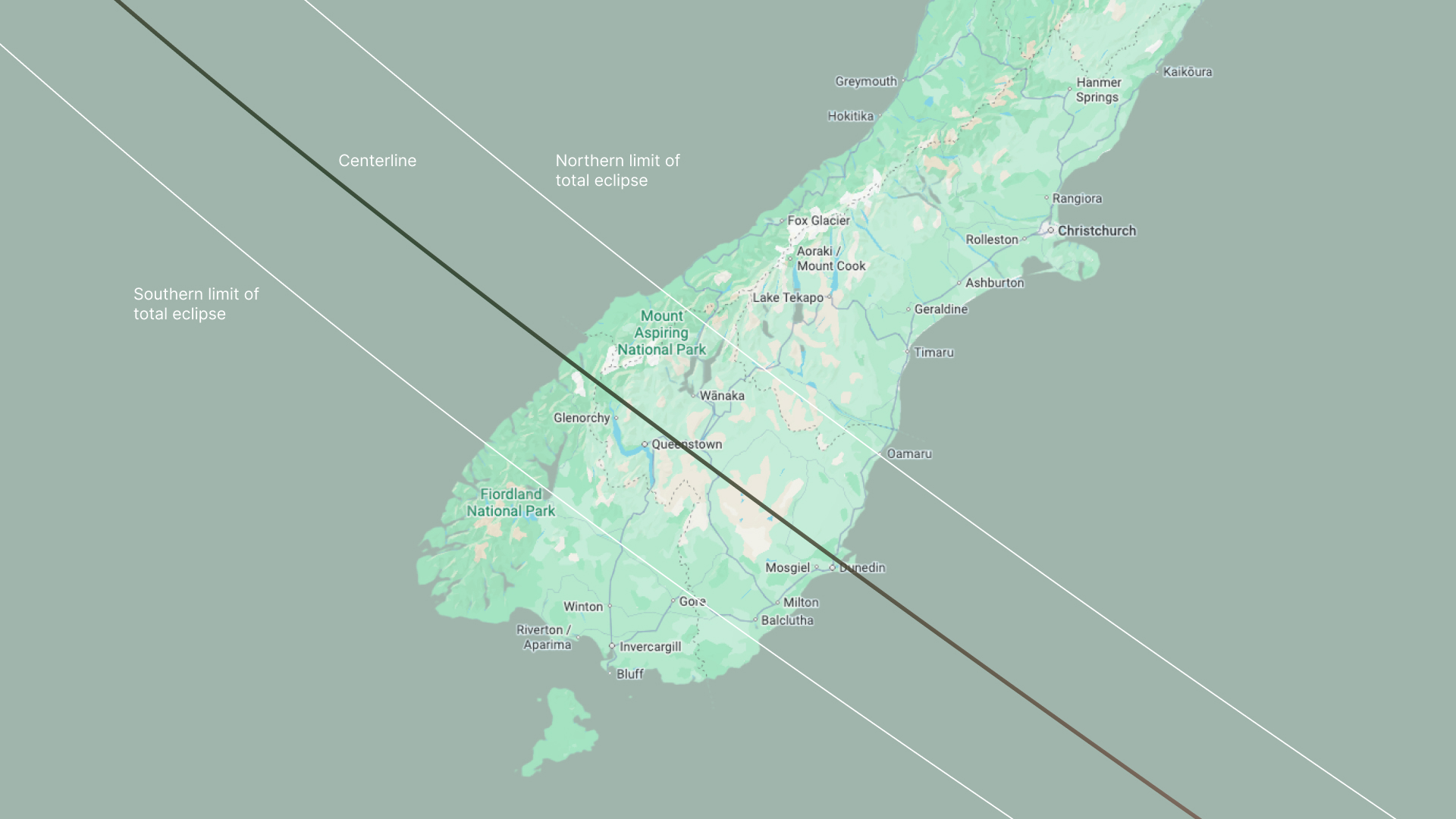
On Saturday 22 July 2028, a total solar eclipse will pass over parts of Australia and New Zealand, giving travellers a rare chance to experience totality from the lower South Island. In New Zealand, Dunedin, Queenstown and Ranfurly are all listed within the path of totality, with the full eclipse beginning shortly after 3 pm and ending around 5:20 pm NZST.
2028 total solar eclipse in New Zealand
For travellers coming from the United States, this is more than a few minutes of sky-watching. It’s a reason to plan a South Island winter journey around Dunedin, Queenstown, Aoraki Mount Cook National Park, Lake Tekapo and some of New Zealand’s best stargazing.
| Planning question | Quick answer |
|---|---|
| When is the 2028 solar eclipse? | Saturday 22 July 2028 |
| Will New Zealand see totality? | Yes, in parts of the South Island |
| Best New Zealand viewing base | Dunedin, based on current timing and average cloud-cover data |
| Dunedin totality duration | 2 minutes 50 seconds |
| Best itinerary flow | Christchurch to Dunedin to Queenstown to Aoraki Mount Cook to Lake Tekapo to Christchurch |
| Best astronomy add-on | Lake Tekapo, the Mackenzie Country and Aoraki Mount Cook National Park |
When is the 2028 solar eclipse?
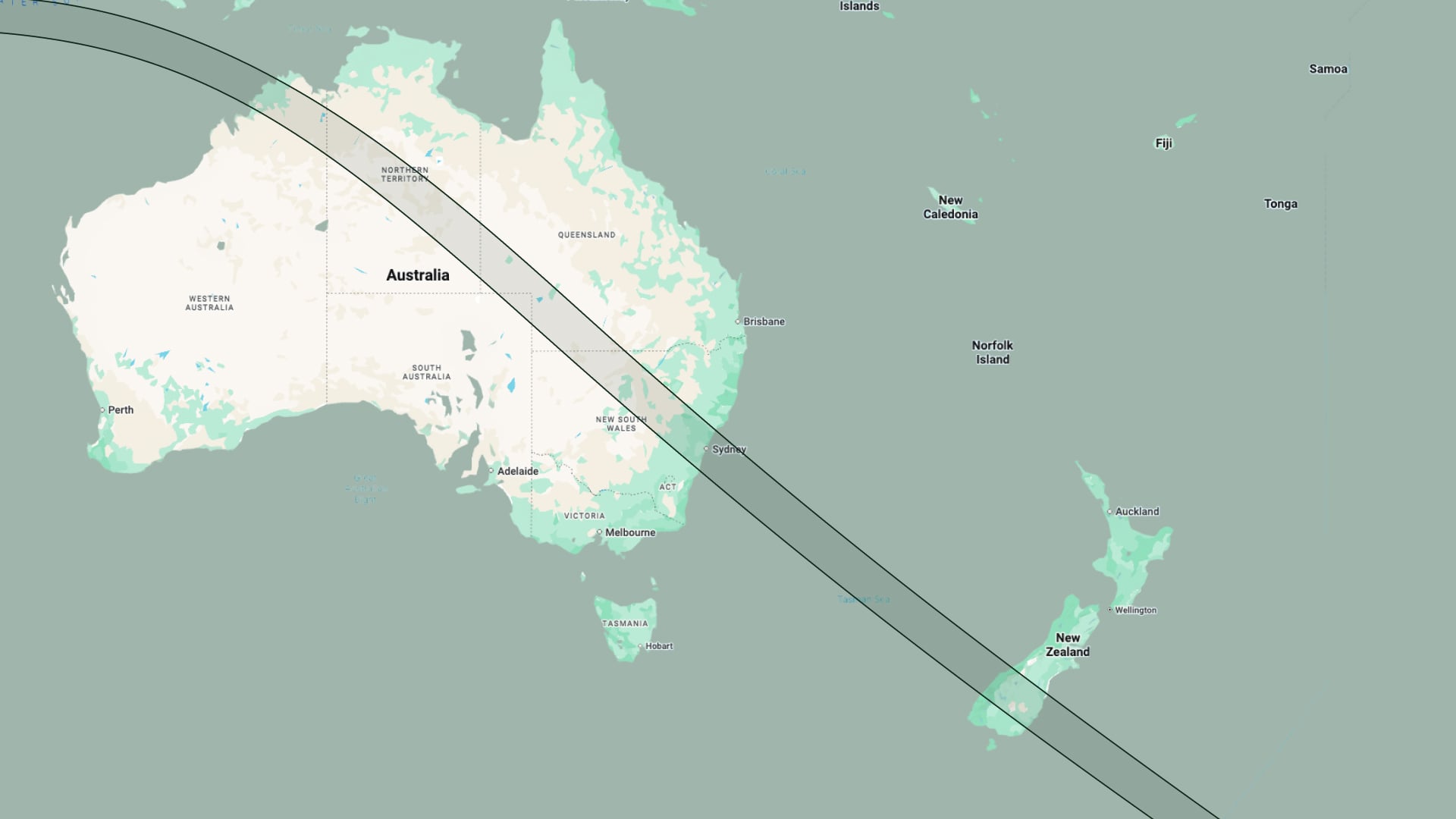
The solar eclipse of 22 July 2028 is a total solar eclipse. Its path crosses parts of Australia and New Zealand, with totality visible only inside a narrow band. In New Zealand, the main travel focus will be the lower South Island, especially Dunedin, Queenstown and parts of inland Otago.
The eclipse happens in July, which is winter in New Zealand. That matters for planning. Days are shorter, alpine roads can be icy, and Queenstown is already busy with ski-season travellers. I’d plan to arrive several days before eclipse day rather than flying in at the last minute, especially if you’re connecting through Auckland, Christchurch or Australia.
2028 solar eclipse times in New Zealand
Current Timeanddate data lists the following New Zealand eclipse times and totality durations. The exact experience will vary by viewing location, and weather forecasts won’t be useful until much closer to the date.
| Location | Eclipse begins | Maximum eclipse | Eclipse ends | Totality duration | Average cloud cover |
|---|---|---|---|---|---|
| Dunedin | 3:09 pm NZST | 4:17 pm NZST | 5:20 pm NZST | 2 min 50 sec | 56% |
| Queenstown | 3:07 pm NZST | 4:16 pm NZST | 5:20 pm NZST | 2 min 54 sec | 60% |
| Ranfurly | 3:08 pm NZST | 4:17 pm NZST | 5:20 pm NZST | 2 min 18 sec | 59% |
Timeanddate lists these locations at 100.00% obscuration, which means the Sun is fully covered by the Moon during totality from those places. It doesn’t mean the whole landscape becomes pitch black like midnight. A better expectation is a dramatic dimming, a twilight-like atmosphere, a drop in temperature, changing shadows and, if skies are clear, a view of the solar corona during the short totality window.
Where is the best place to see the 2028 solar eclipse in New Zealand?
Dunedin
Dunedin is the strongest New Zealand base to lead with for the 2028 total solar eclipse. Based on the current Timeanddate table, it has the lowest average cloud-cover figure of the three named New Zealand locations, at 56%, while still offering 2 minutes and 50 seconds of totality.
That doesn’t guarantee a clear sky. July is winter, and Otago weather can change quickly. But if you’re choosing a practical travel base from the currently listed New Zealand locations, Dunedin has a strong mix of eclipse timing, coastal scenery, accommodation, wildlife, food, heritage and onward route options.
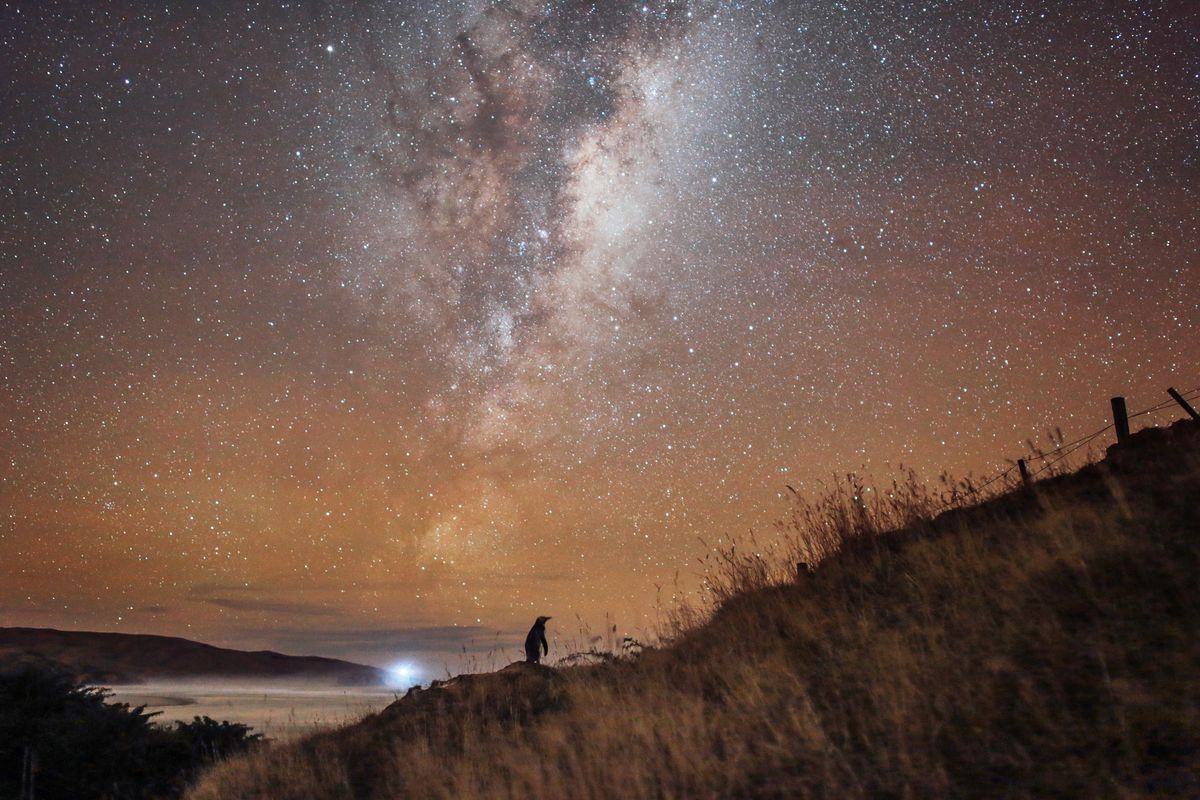
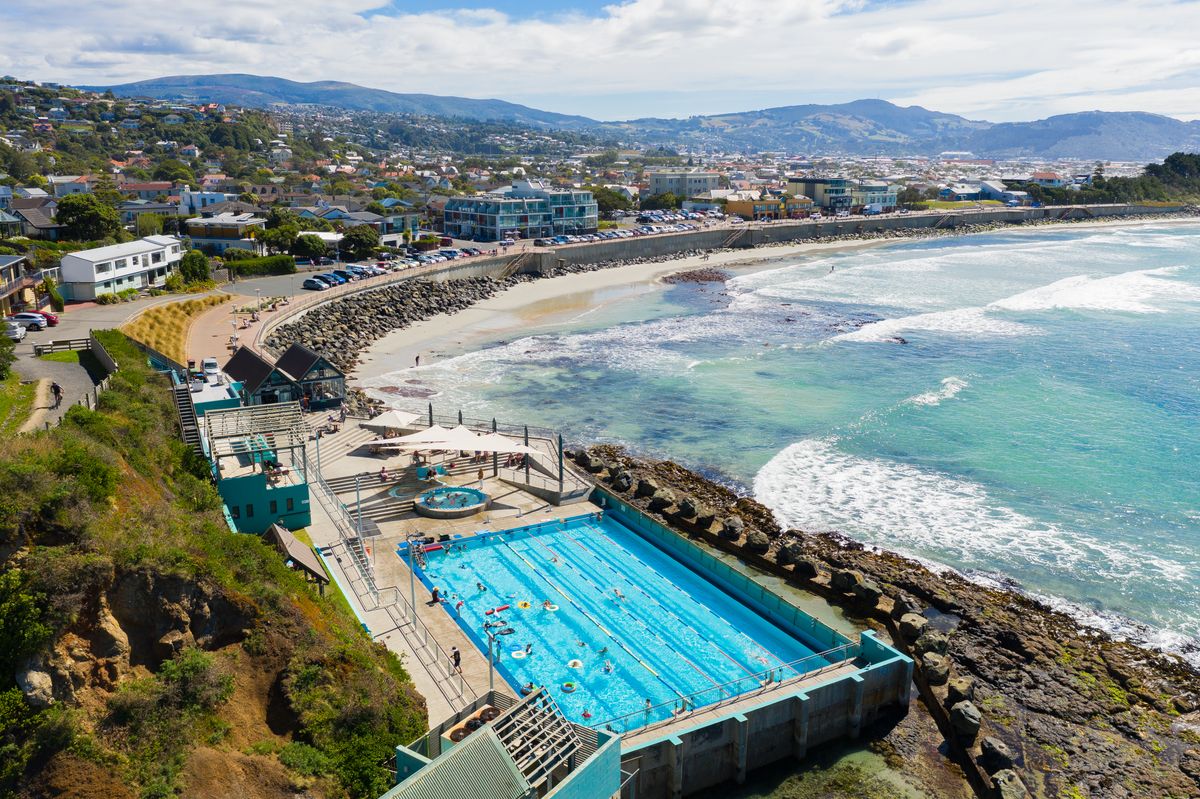
It’s also a place worth staying for more than the eclipse. The Otago Peninsula has albatross, penguins, beaches and headland views, and the city has a more lived-in feel than Queenstown. For travellers who don’t want the higher-pressure atmosphere of a ski resort town, Dunedin is a sensible anchor.
Start with the Dunedin travel guide when you’re deciding how many nights to allow. For most eclipse itineraries, I’d give Dunedin at least three nights: one to arrive, one for the Otago Peninsula, and one for eclipse day.
Queenstown
Queenstown still matters. It has a slightly longer listed totality duration than Dunedin, at 2 minutes and 54 seconds, and it brings the alpine setting many travellers picture when they think of the South Island.
The trade-off is cloud cover and demand. The average cloud-cover figure listed for Queenstown is 60%, and July is already winter peak season around the ski fields. Accommodation, rental cars, premium lodges and restaurants may book heavily once eclipse travel picks up.
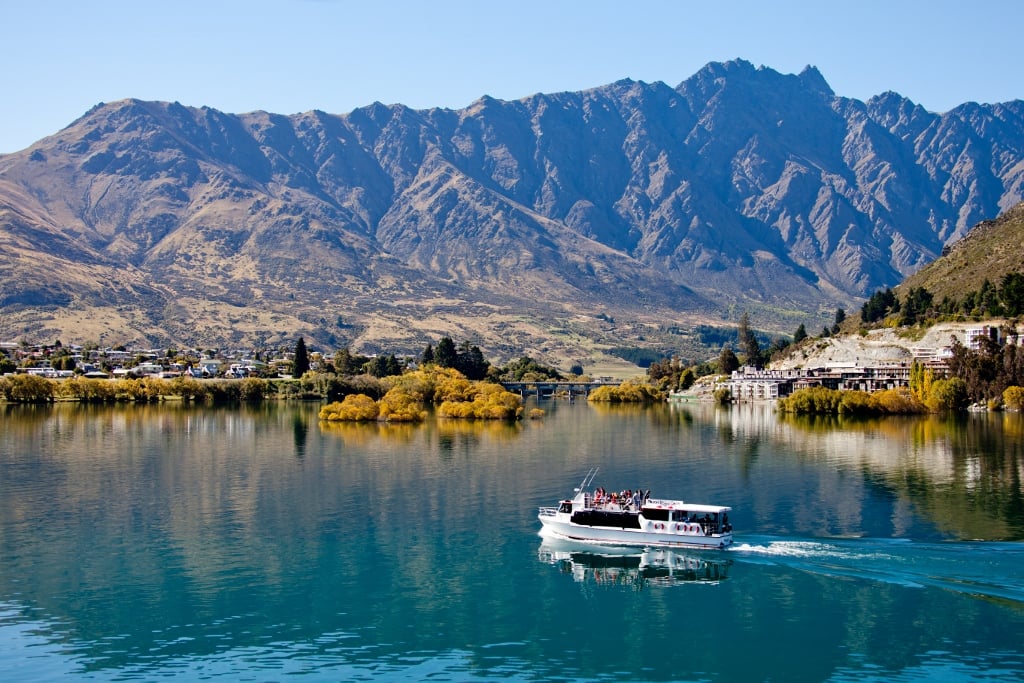
Queenstown works best after Dunedin in this itinerary. You can view the eclipse from Dunedin, then travel inland through Central Otago to Queenstown for Lake Wakatipu, Gibbston wineries, alpine scenery and Fiordland access. The Queenstown travel guide is the right place to start if you’re weighing up two or three nights here.
For a route style that already includes Dunedin, Queenstown, Milford Sound and major South Island scenery, the South Island Spectacular tour is a great place to start. A 2028 eclipse trip will need custom timing and the surrounding days adjusted to suit, so speak to a travel specialist to get a free tailor-made itinerary.
Ranfurly and inland Otago
Ranfurly is also listed in the path of totality, with 2 minutes and 18 seconds of totality and average cloud cover of 59%.
I wouldn’t lead with Ranfurly as the main base for most international travellers. It may become useful closer to the time if local events, viewing arrangements or weather planning point that way. For now, it works best as part of the wider Central Otago story between Dunedin and Queenstown.
What will the eclipse look like in Dunedin?
In Dunedin, the partial eclipse begins at 3:09 pm NZST, reaches maximum eclipse at 4:17 pm and ends at 5:20 pm. Totality lasts 2 minutes and 50 seconds.
Because maximum eclipse is late afternoon in winter, the Sun will already be low. The light should change noticeably through the partial phases, then drop sharply during totality. Expect the air to cool, birds and wildlife to react, and the sky to take on a strange, dusky quality if cloud doesn’t get in the way.
It won’t be “100% dark” in the everyday sense. Totality means the Sun’s bright face is completely covered from your viewing point. The sky darkens, but the horizon can still hold colour, and the experience is closer to sudden twilight than midnight.
Dunedin or Queenstown for the 2028 eclipse?
| Choose Dunedin if you want | Choose Queenstown if you want |
|---|---|
| The best overall New Zealand viewing base based on current cloud-cover data | A classic alpine resort setting |
| 2 min 50 sec of totality | 2 min 54 sec of totality |
| Lower listed average cloud cover than Queenstown | Lake Wakatipu and mountain scenery |
| Wildlife, coast and the Otago Peninsula | Wineries, ski-season energy and Fiordland access |
| A logical route into Central Otago and Queenstown | Premium lodges and easy alpine touring |
My recommendation is to base the eclipse around Dunedin, then include Queenstown afterwards. That gives you a strong practical viewing base and still brings in the alpine scenery most travellers don’t want to miss.
Why add stargazing to a 2028 eclipse trip?
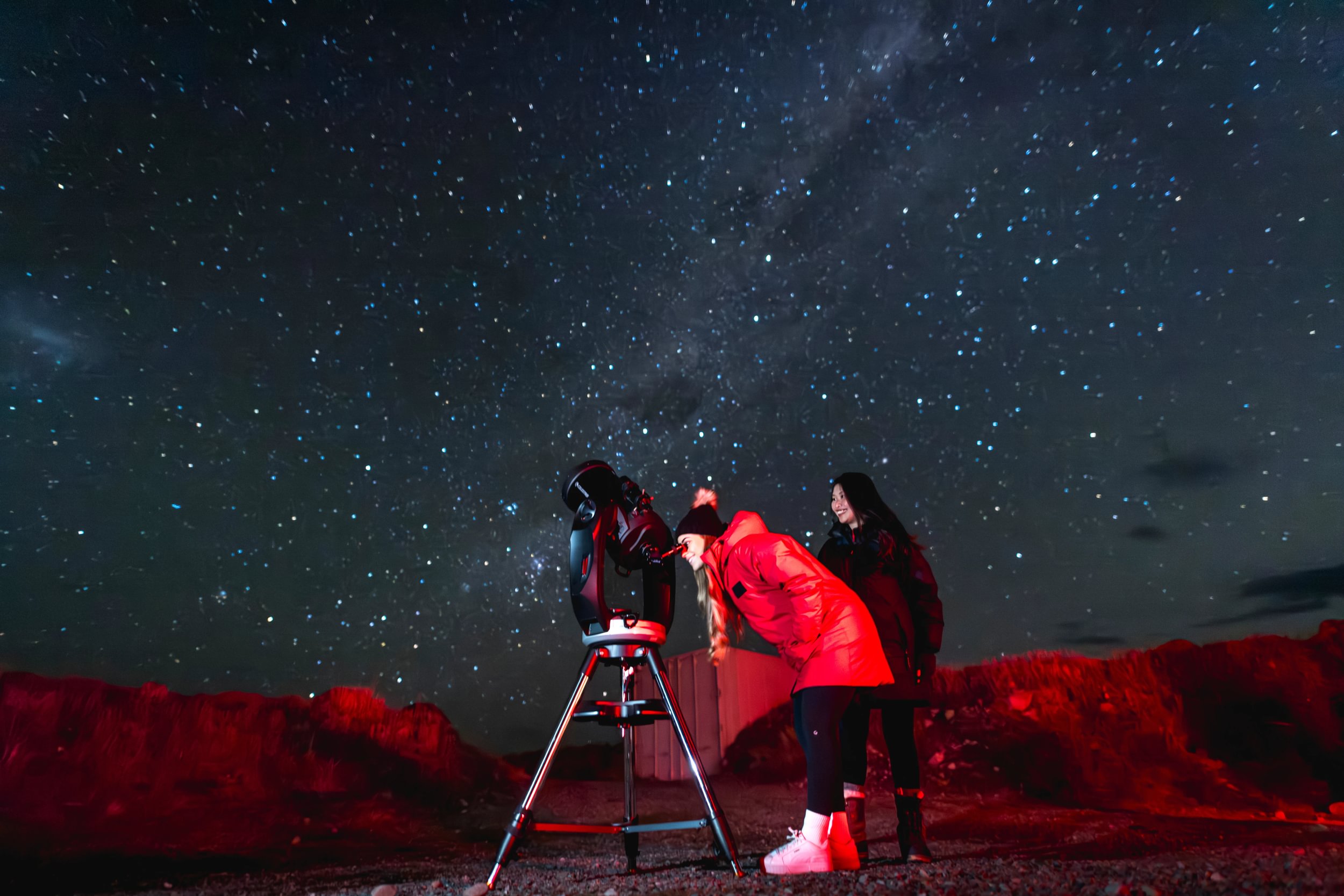
A total solar eclipse is a daytime astronomy event, but New Zealand gives you the chance to turn it into a wider sky-focused journey. The best places to do that are Lake Tekapo, the Mackenzie Country and Aoraki Mount Cook National Park.
The Aoraki Mackenzie International Dark Sky Reserve covers 4,367 square kilometres and includes Aoraki Mount Cook National Park and the Mackenzie Basin. It is the largest dark sky reserve in the Southern Hemisphere.
This makes it a natural addition after Queenstown. You can view the eclipse in Dunedin, travel through Central Otago to Queenstown, then head north to Aoraki Mount Cook National Park and Lake Tekapo before returning to Christchurch.
The key is not to treat this part of the trip as a quick photo stop. In July, I’d allow at least one night around Aoraki Mount Cook or one night around Lake Tekapo. If stargazing matters to you, two nights across the Mackenzie region gives you a better chance of clear skies.
For route ideas, look at the Lake Tekapo travel guide and the Aoraki Mount Cook National Park guide. If you want the night sky to be a major theme of the journey, the New Zealand Stargazing Tour is a useful starting point, with stargazing, dark-sky experiences and South Island scenery that can be customised to include Dunedin on the eclipse date.
Lake Tekapo, Mackenzie Country and Aoraki Mount Cook: how they fit into the trip
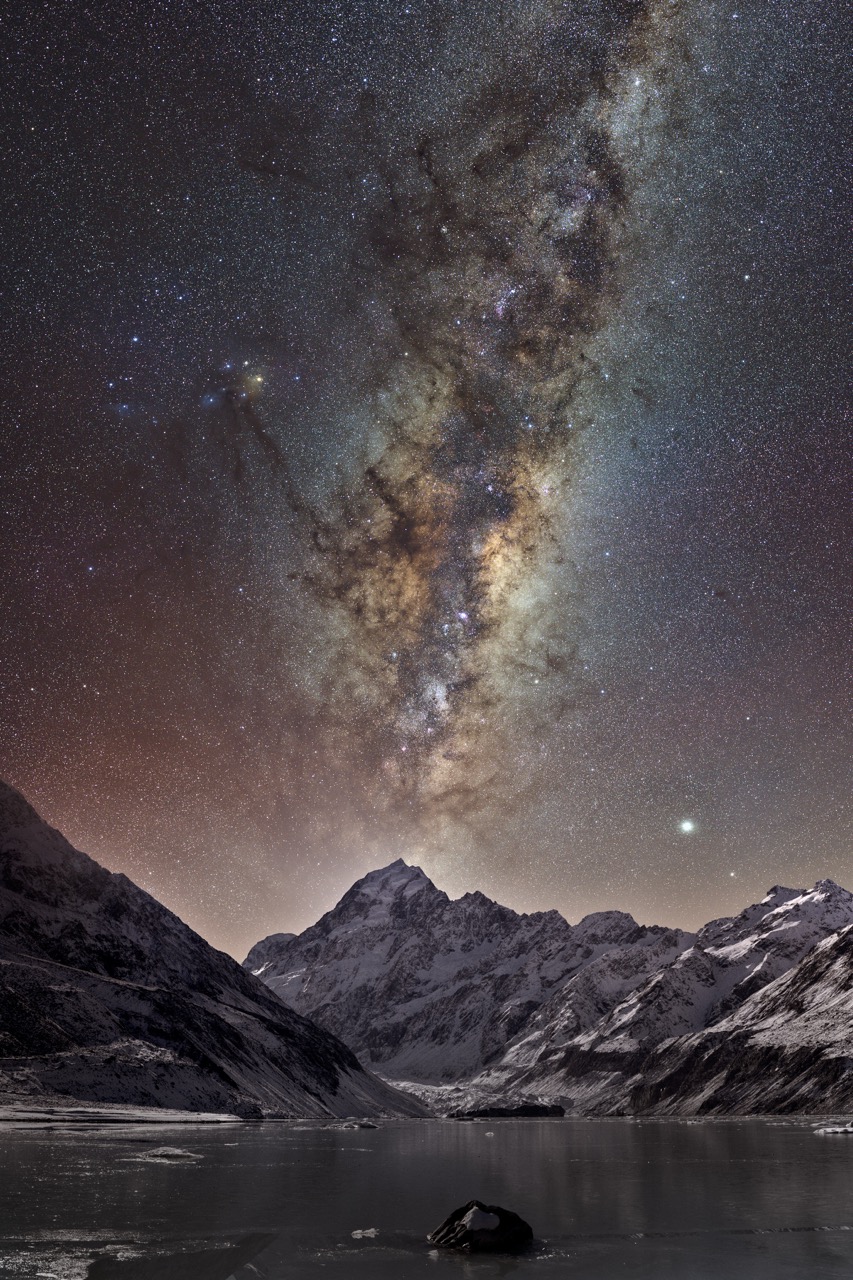
Aoraki Mount Cook National Park
Aoraki Mount Cook National Park is best placed after Queenstown in this itinerary. The drive north takes you through open high-country landscapes, past lakes and mountain views, with a slower rhythm than the Queenstown to Dunedin section.
In winter, you need to keep plans realistic. Short walks, viewpoints and scenic flights are more suitable for most travellers than long hiking days. Weather can move quickly around the Southern Alps, and icy conditions can affect roads and tracks.
A good Aoraki Mount Cook stay might include:
- One night if you’re short on time
- Two nights if you want better weather flexibility
- A short valley walk if conditions allow
- Glacier and mountain viewpoints
- A scenic flight if the weather is clear
- Stargazing on a cloud-free night
Lake Tekapo
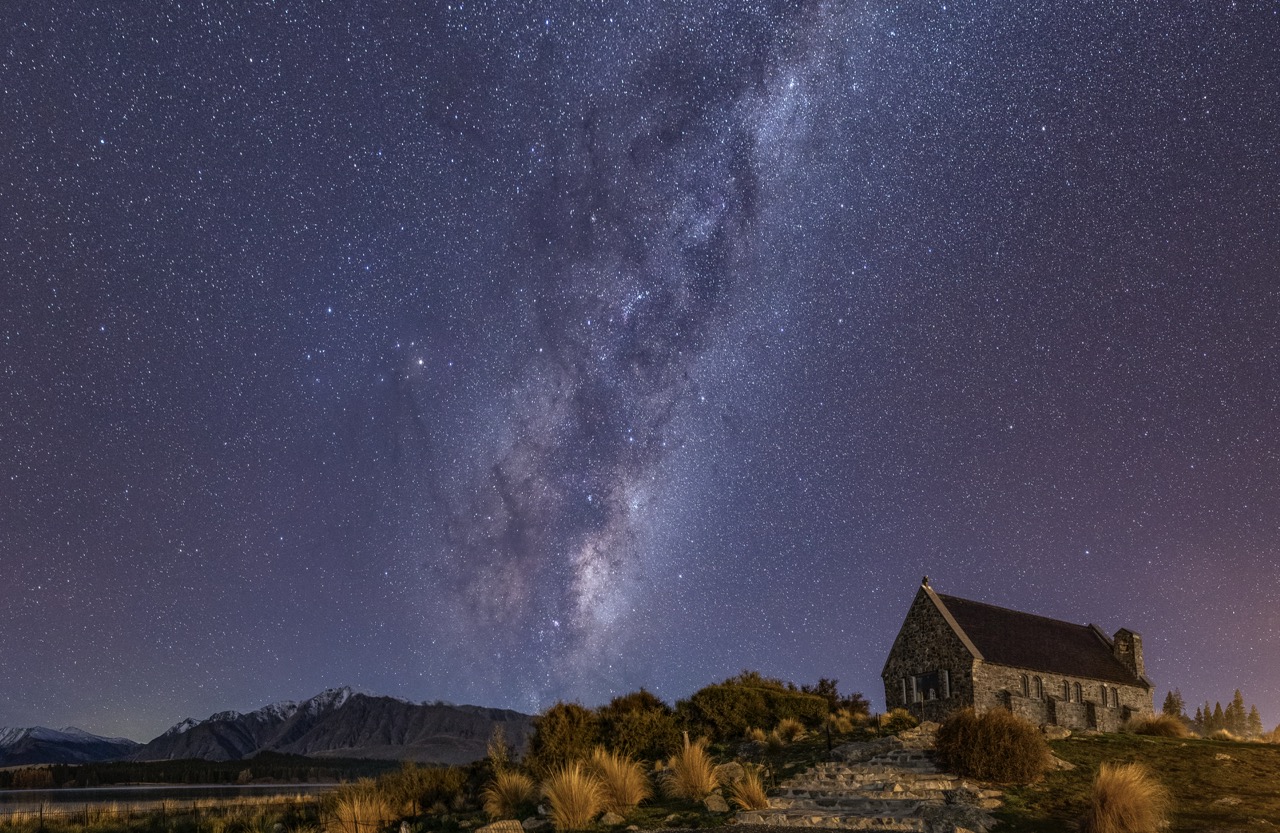
Lake Tekapo works well after Aoraki Mount Cook and before Christchurch. It keeps the sky theme going while easing you back towards the east coast and your departure point.
Tekapo is known for its lake, mountain outlook and dark-sky experiences. In July, evenings are cold, so this is not the place to underpack. Bring warm layers, gloves, a hat and proper footwear if you’re heading out at night.
A good Lake Tekapo stay might include:
- One night beside the lake
- A guided stargazing experience if skies are clear
- Time around the lakefront and nearby viewpoints
- A relaxed final drive back to Christchurch
The Dark Sky Detour is especially relevant for eclipse travellers because it focuses on Lake Tekapo and the night sky around Mount John Observatory. Like many existing stargazing tour routes, we will need customise it so Dunedin is added for 22 July 2028. Get in touch with one of our travel specialists to get a free tailor-made itinerary.
Mackenzie Country
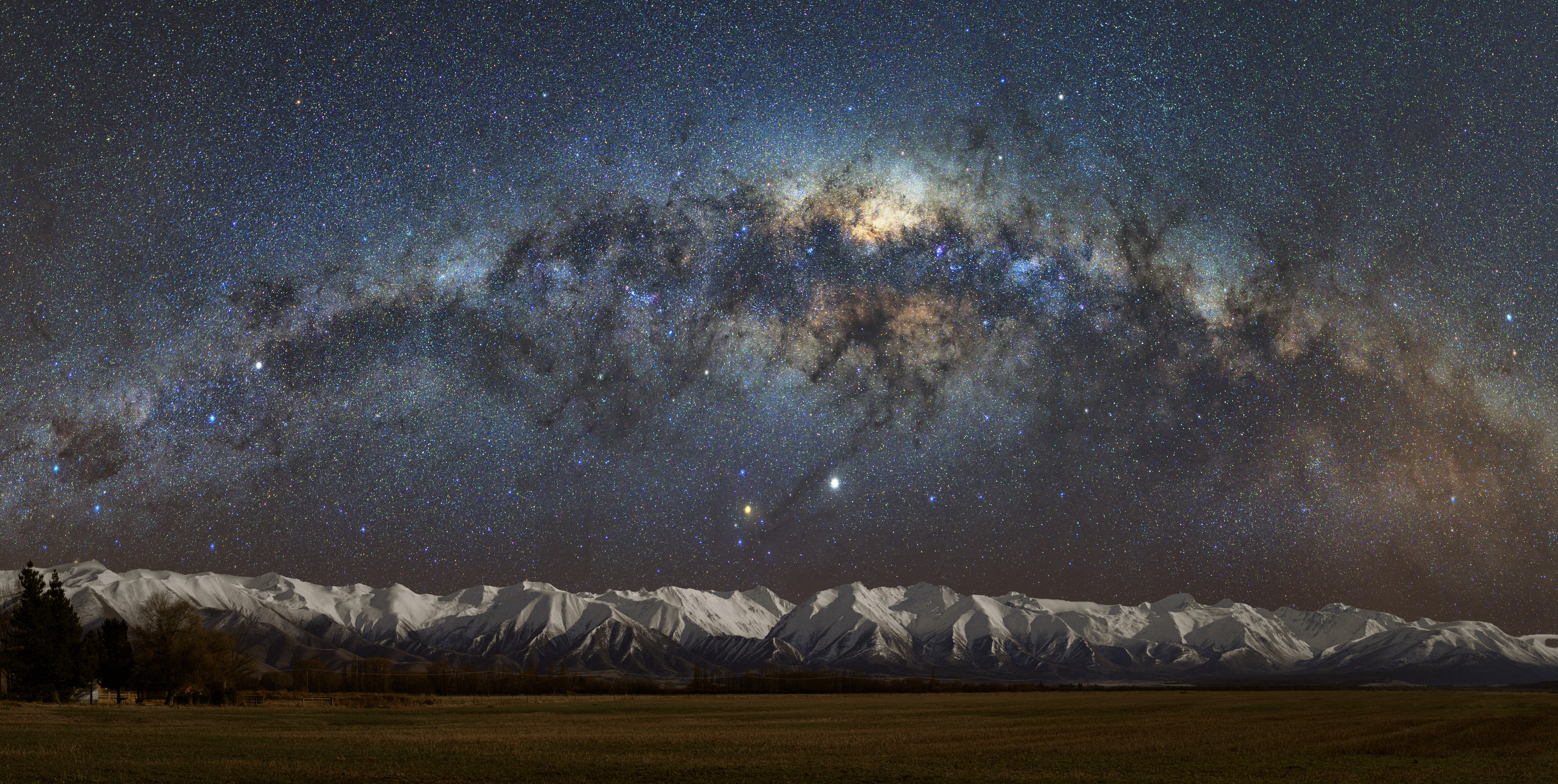
The Mackenzie Country is the high-country basin around Lake Tekapo, Twizel, Lake Pukaki and Aoraki Mount Cook. It’s one of the best places in New Zealand to slow down after the eclipse.
In winter, the light can be sharp, the tussock turns gold, and the Southern Alps sit across the horizon. It’s also a good place to give the itinerary breathing room. After the fixed timing of eclipse day, a night or two in the Mackenzie Country lets the trip settle into a more relaxed pace.
Several Discover New Zealand self-drive routes pass through this part of the South Island, including the South Island Self Drive Tour. This kind of route works well as a framework, with Dunedin included as the eclipse base and the other travel days adjusted around it.
Best 2028 solar eclipse itinerary flow
A strong South Island eclipse route would be:
Christchurch to Dunedin eclipse base to Queenstown to Aoraki Mount Cook National Park to Lake Tekapo to Christchurch.
This keeps Dunedin as the practical eclipse-viewing anchor, then adds Queenstown’s alpine scenery and the Mackenzie Country’s dark-sky experiences before returning to Christchurch.
Explore our sample 2028 New Zealand solar eclipse trips for accommodation, route and itinerary options built around totality.
All South Island road trip and self-guided coach tours are 100% customisable and can be lined up with the eclipse date, and include Dunedin in the right place for totality. We can also handle your trip as a custom itinerary, adding Dunedin for the exact date of the eclipse, then shift Queenstown, Mount Cook, Lake Tekapo, Christchurch and any other destinations or experiences you're interested in around that fixed point. Get in touch to discuss ideas with one of our Wānaka-based travel specialists.
Suggested 2028 solar eclipse New Zealand itineraries
7-day South Island eclipse itinerary
A week is tight, but it can work if you keep the route focused and use Dunedin as the eclipse base.
| Day | Suggested plan |
|---|---|
| 1 | Arrive Christchurch, overnight and recover from the long-haul flight |
| 2 | Travel south to Dunedin |
| 3 | Explore Dunedin, the Otago Peninsula and nearby coastal viewpoints |
| 4 | Eclipse viewing day in or near Dunedin |
| 5 | Travel inland towards Queenstown via Central Otago |
| 6 | Queenstown sightseeing, lake views, wineries or a short alpine activity |
| 7 | Depart Queenstown or continue north if you have extra time |
This works best for travellers who want the eclipse as the clear focus and don’t want to overpack the route. It gives Dunedin proper space as the viewing base, then finishes with Queenstown’s alpine scenery.
If you want to finish in Christchurch rather than Queenstown, I’d add at least two more days so you can include Aoraki Mount Cook and Lake Tekapo properly.
10-day Dunedin eclipse and South Island dark-sky itinerary
Ten days is a much better pace for most travellers because it gives you time for Dunedin, Queenstown, Aoraki Mount Cook National Park and Lake Tekapo without turning every day into a transit day.
| Day | Suggested plan |
|---|---|
| 1 | Arrive Christchurch, overnight after the long-haul flight |
| 2 | Travel south to Dunedin |
| 3 | Dunedin city, beaches and Otago Peninsula wildlife |
| 4 | Eclipse viewing day in or near Dunedin |
| 5 | Travel through Central Otago to Queenstown |
| 6 | Queenstown sightseeing, lake cruise, wineries or winter activities |
| 7 | Fiordland day trip or a slower Queenstown day |
| 8 | Travel north to Aoraki Mount Cook National Park |
| 9 | Aoraki Mount Cook alpine scenery, short walks and night-sky viewing |
| 10 | Lake Tekapo, Mackenzie Country stargazing, then return to Christchurch or overnight before departure |
This is the itinerary I’d favour for travellers who want a proper South Island eclipse trip. Dunedin anchors the eclipse, Queenstown adds the alpine resort experience, and Aoraki Mount Cook plus Lake Tekapo keeps the astronomy theme going after totality.
The Highlights of the South Island Tour is a useful route reference because it links Christchurch, Aoraki Mount Cook, Dunedin, Milford Sound and Queenstown. For 2028, the trip would need to be customised so Dunedin is locked in for eclipse day, with the other destinations moved around that date.
14-day New Zealand eclipse and stargazing holiday
Two weeks gives the trip more breathing room and lets you build the eclipse into a fuller New Zealand holiday without rushing the South Island.
| Days | Suggested plan |
|---|---|
| 1 to 2 | Arrive Christchurch, recover from the flight and explore the city |
| 3 | Travel south to Dunedin |
| 4 | Otago Peninsula wildlife, beaches and coastal scenery |
| 5 | Eclipse viewing day in or near Dunedin |
| 6 | Central Otago touring on the way to Queenstown |
| 7 to 8 | Queenstown, Lake Wakatipu, Gibbston wineries and winter activities |
| 9 | Milford Sound or Doubtful Sound day trip |
| 10 | Travel north through Wānaka or Omarama towards Aoraki Mount Cook |
| 11 | Aoraki Mount Cook National Park, alpine walks and glacier viewpoints |
| 12 | Lake Tekapo and Mackenzie Country stargazing |
| 13 | Return to Christchurch |
| 14 | Depart Christchurch |
This route keeps the travel logic clean: start and finish in Christchurch, use Dunedin as the eclipse base, then move inland to Queenstown before looping north through Aoraki Mount Cook and Lake Tekapo.
For travellers who care about astronomy, I’d allow at least one night around Aoraki Mount Cook and one night around Lake Tekapo. One clear night is never guaranteed in winter, so two chances under the Mackenzie skies are better than one.
For a more premium style of South Island travel, Stories of Aotearoa is a useful reference because it includes strong South Island scenery, Milford Sound and Mount Cook. This itinerary is 100% customisable, so we can plan around Dunedin and the eclipse night.
Why a custom eclipse itinerary matters
The date of the 2028 total solar eclipse is fixed. Your itinerary needs to work around that date, not the other way around.
Many South Island tours visit Queenstown, Fiordland, Aoraki Mount Cook and Lake Tekapo, but they may not include Dunedin or may not place Dunedin on 22 July 2028. For this trip, Dunedin should be treated as the anchor. The rest of the route can then be designed around it.
That might mean:
- Adding Dunedin to a South Island route that doesn’t usually include it
- Moving Queenstown before or after the eclipse depending on availability
- Adding extra nights in Dunedin for weather and arrival flexibility
- Placing Aoraki Mount Cook and Lake Tekapo after eclipse day for stargazing
- Adjusting Milford Sound touring so it doesn’t create a rushed travel day
- Choosing Christchurch as both the arrival and departure point for a cleaner loop
This is where a local New Zealand travel specialist can help. Rather than trying to force the eclipse into an existing tour, Discover New Zealand can shape the route around the exact date, then match the accommodation, transport and sightseeing to the pace of your trip. Speak to us about your travel plans here.
New Zealand or Australia: where should you see the 2028 eclipse?
Australia will draw major eclipse attention because the path crosses Sydney, which is likely to be one of the highest-profile viewing locations for the 2028 solar eclipse.
That doesn’t make Australia the automatic choice. It comes down to the trip you want around the eclipse. For some travellers, the best answer may be both countries, especially if you want a Sydney eclipse experience followed by a South Island winter journey.
| Choose New Zealand if you want | Choose Australia if you want |
|---|---|
| A South Island journey built around eclipse day | A major-city eclipse experience |
| Dunedin as a practical viewing base | Sydney as your main base |
| Queenstown, Fiordland, wine and wildlife | More urban touring before or after the eclipse |
| Aoraki Mount Cook and Lake Tekapo stargazing | Australia-first travel plans |
| A quieter, more nature-focused itinerary | Larger public events and city logistics |
For US travellers, New Zealand works especially well if the eclipse is the anchor for a longer South Island trip. You can arrive into Christchurch, base yourself in Dunedin for totality, continue to Queenstown, then finish with dark skies around Aoraki Mount Cook and Lake Tekapo.
A trans-Tasman itinerary can also work well if you want to include both Australia and New Zealand in one trip. Through our sister company, Inside Australia Travel, we can help coordinate the Australian side of your journey, then connect it with a New Zealand itinerary planned around the eclipse date. That might mean Sydney for the eclipse followed by Queenstown, Aoraki Mount Cook and Lake Tekapo, or a New Zealand-first route with Australia added before or after.
If New Zealand is the main goal, a South Island-focused trip will usually feel smoother. If you’ve always wanted to visit Australia too, this is a good chance to build one well-planned trans-Tasman journey rather than booking the two countries separately.
Why book your 2028 eclipse trip early?
The 2028 eclipse may sound far away, but the best accommodation in Dunedin, Queenstown, Aoraki Mount Cook and Lake Tekapo is limited compared with major cities. Eclipse travel creates unusual demand because everyone needs to be in the right region on the same date.
Early planning matters for:
- Dunedin accommodation close to the city or Otago Peninsula
- Queenstown stays during ski season
- Lake Tekapo and Mount Cook accommodation for stargazing
- Rental cars and winter-ready vehicles
- Private guides and transfers
- Milford Sound flights, cruises and scenic touring
- Domestic flights into Christchurch, Dunedin or Queenstown
- Flexible routing in case weather becomes a factor
July is also winter travel season. Queenstown can be busy around the ski fields, while smaller places like Lake Tekapo and Mount Cook have fewer beds to begin with. I'd recommend securing your itinerary and bookings as early as 2026/2027.
Start with New Zealand holiday packages for route ideas, or look at New Zealand road trips if you’re thinking about a self-drive journey. Treat these as starting points rather than fixed eclipse departures, because Dunedin needs to be placed on the exact eclipse date. Remember, all of our road trip and self-guided coach tours are 100% customisable.
Eclipse viewing safety
You’ll need proper eye protection for the 2028 total solar eclipse.
NASA advises that it is not safe to look directly at the Sun without specialised eye protection except during the brief total phase of a total solar eclipse, when the Moon completely blocks the Sun’s bright face. Eclipse glasses must be used during the partial phases before and after totality.
Regular sunglasses are not safe for eclipse viewing. Don’t look at the Sun through a phone camera, binoculars, telescope or camera lens unless the equipment has a proper solar filter. Optical devices concentrate sunlight and can cause serious eye damage.
During totality itself, local guidance will explain when it is safe to remove eclipse glasses. That window is brief. Put them back on as soon as any bright part of the Sun reappears.
Planning tips for US travellers
Arrive several days before eclipse day
Long-haul travel from the United States can leave you tired for the first day or two. Build in recovery time before 22 July 2028, especially if you’re flying through Auckland, Sydney, Christchurch or Queenstown.
For this itinerary, Christchurch is the cleanest entry and exit point. You can arrive, rest, travel south to Dunedin, then loop back north through Queenstown, Aoraki Mount Cook and Lake Tekapo.
Remember July is winter in New Zealand
July in the South Island can be beautiful, but it’s cold. Pack proper layers, a warm jacket, gloves, waterproof footwear and clothes that handle wind.
Roads through alpine areas can be affected by snow or ice. If you’re self-driving, keep the daily distances sensible and check conditions before setting out.
Use Dunedin as the eclipse anchor
Dunedin is the best place to anchor the trip based on the current viewing data. It has a strong totality duration, the lowest listed average cloud-cover figure among the three named New Zealand locations, and enough travel appeal to justify several nights.
Add Queenstown after the eclipse
Queenstown works well after Dunedin because it shifts the trip inland into alpine scenery. You can travel through Central Otago, add wineries or lake time, then use Queenstown as a base for Fiordland if your schedule allows.
The Milford Sound destination guide is useful if you’re deciding whether to include a day trip, scenic flight or overnight option from Queenstown or Te Anau.
Keep stargazing for the Mount Cook and Tekapo section
Lake Tekapo and Aoraki Mount Cook are natural additions after Queenstown. They let you keep the astronomy theme going without using them as the main eclipse base.
This is especially worthwhile for travellers who enjoy night-sky photography. A clear winter night in the Mackenzie Country can be remarkable, but it’s never guaranteed. Give yourself time rather than banking everything on one evening.
Don’t overpack the route
New Zealand looks small on a map, but South Island driving is slower than many travellers expect. Mountain roads, winter conditions, photo stops and one-lane bridges all add time.
A well-paced eclipse itinerary should feel like a journey, not a race between bookings. For most travellers, the 10-day or 14-day version will feel much better than trying to fit Dunedin, Queenstown, Mount Cook and Tekapo into one week.
Let Discover New Zealand design your 2028 eclipse itinerary
A total solar eclipse is not the kind of trip I’d leave to scattered bookings and guesswork. Accommodation, transport, eclipse-day positioning, stargazing stays and winter travel timing all need to work together.
Discover New Zealand can design a custom itinerary around your travel dates, preferred viewing region, accommodation style, transport and must-see experiences. That might mean a Dunedin-based eclipse stay, a Queenstown alpine extension, a Lake Tekapo stargazing add-on, or a longer South Island holiday with the eclipse as the centrepiece.
Most importantly, your itinerary can be adjusted so Dunedin is included on the exact date of the eclipse. From there, the other days can be shaped around the best route, accommodation availability, winter road conditions and the experiences you care about most.
Explore our sample New Zealand solar eclipse 2028 travel packages, then speak with a New Zealand travel specialist about shaping your journey around 22 July 2028.
Turning the 2028 Eclipse Into a New Zealand Journey
The solar eclipse 2028 is a rare chance to experience totality from New Zealand’s South Island, but the strongest trip won’t be built around eclipse day alone. Dunedin is the best place to anchor the viewing plan based on current data, with Queenstown, Aoraki Mount Cook National Park and Lake Tekapo adding the scenery and stargazing that make the journey feel complete.
For most US travellers, the best route is Christchurch to Dunedin to Queenstown to Aoraki Mount Cook to Lake Tekapo to Christchurch. It keeps the travel logic clean, gives the eclipse proper space, and turns a few minutes of totality into a carefully paced New Zealand winter journey.


